Where on the Map? From Senegal → Living in Senegal (Île de Ngor, Dakar)
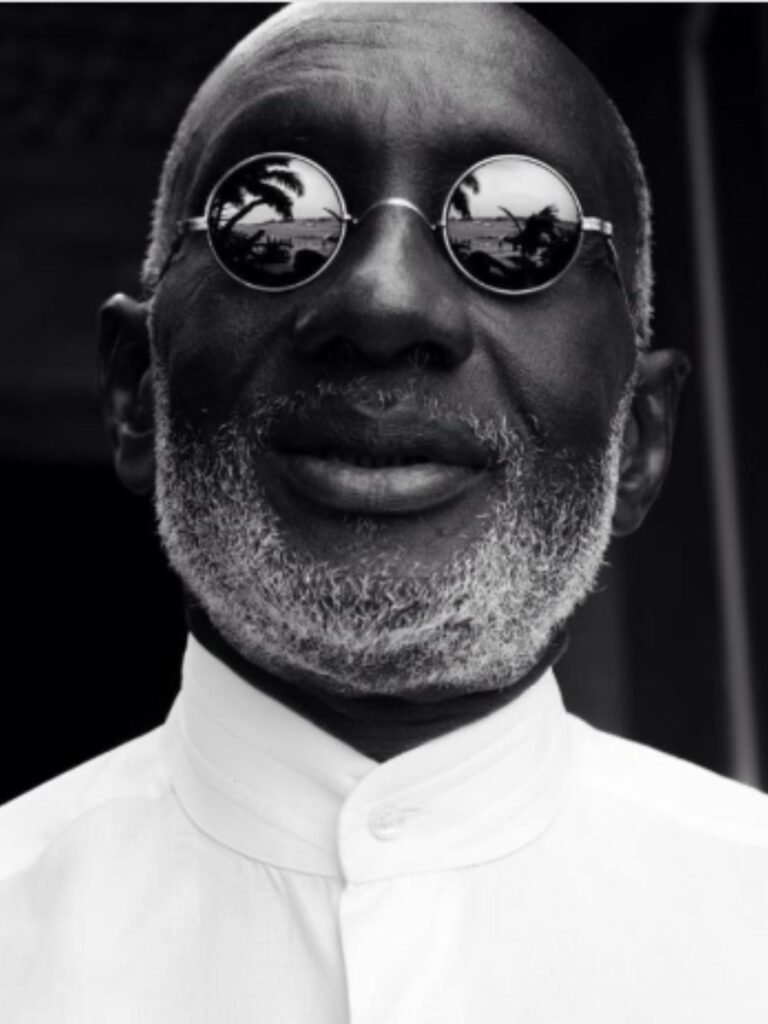
In July 2022, I had the honor of interviewing Mr. Abdoulaye Diallo, known as Le Berger de l’Île de Ngor, the Shepherd of the Island of Ngor. He has since passed away. As Our Stories On The Map begins, it feels right to open with his voice. These are his words, as he shared them with me.
Mr. Diallo was an artist who found solace in painting in his studio, an iconic red house on Ngor, a tiny island off the coast of Dakar, Senegal, reachable only by small canoe.
Could you tell us a little about yourself, and since when you’ve been an artist?
I am Abdoulaye Diallo, aka the Shepherd of the Island of Ngor, a nickname given to me by the late Grand Master of the Arts, Pr Saliou Ndiongue. I was born on 25 December 1952 in Dakar, Senegal, where I received both a secular and an Islamic education. I studied engineering at ECE Paris and became an electrical engineer. I am also a devout Muslim who lives by his faith.
Do you remember the first time you fell in love with art, and why painting?
Painting came late into my life, at the venerable age of 59, exactly on 30 December 2011. I was influenced by local artists, so I took their supplies and tried to imitate their movement to amuse my guests. And it was the beginning of it all. My permanent curator, Pr Magueye Kasse, called me the “Painter of Gestation” because of my extensive use of numbers and codes in my work. Nothing amazes me more than how the art of my motherland, the African continent, has an immeasurable impact on our universal heritage.
What can you tell us about your workshop?
My studio is not only a place where you may admire and discuss my work. It is also a place where you can open yourself up to new ideas, new dimensions, and thoughts of a magnitude you can’t even begin to imagine.
Which tools do you like to use?
A variety of paintbrushes, a Diola broom, needles, syringes, the movement of the waves, and my hands and arms, which often vibrate to the beat of the songs I listen to. I only paint on paper, but I use many materials: oil, acrylic, gouache, ink, coffee, millet, palm oil, tea, cactus blood, resin, crystal, captured smoke and seawater. When inspiration strikes, I lay my canvas, colors and materials on the floor, and colors are created, invented, transformed and dissolved until the magic happens and my vision comes to life.
Where do you go when you need inspiration?
I find inspiration everywhere, even in the most ordinary moments: the morning shower, the sound of waves on the rocks, a walk on the beach, music, a drop of water on a flower, a poem, and HOP! My neurons get agitated, an image is formed, and the work is born. The moment is captured and fixed in time.
Which artists inspire you?
I have great respect for the artists of yesterday and my contemporaries. I love, with different intensities, Salvador Dalí, Egon Schiele, Picasso and Gustav Klimt.
What do you consider your most valuable accomplishment?
Freedom. I have gained so much freedom since I started painting. I am proud that my work is resilient and long-lasting because of the variety of colors and textures I use, and that it cannot be copied. My first paintings were sold to friends, six of them to my dear sister and friend, the late French singer France Gall.
How can people buy your paintings?
I have decided not to sell my artwork going forward, but to leave it to posterity.
What advice would you give young artists?
A person who wants to live their passion must be inhabited by three things: absolute faith, a beautiful intention and great willpower. And besides those three, work seriously and rigorously, while having fun.
“Freedom. I have gained so much freedom since I started painting.”
Why he’s on the map
Abdoulaye Diallo began painting at 59, turning seawater, coffee, palm oil and the rhythm of the waves into art, and chose to leave his work to posterity rather than sell it. His life reminds us that it is never too late to begin.
Remember him: see his paintings on Instagram at @lebergerdeliledengor.
Rest in peace, Mr. Diallo. Thank you for your words, your colors and your freedom.
— Salima, Our Stories On The Map
Enjoyed this story? Buy OSOM a coffee and help us find the next one.☕